Introduction |
This manual has been designed to assist in the proper preparation of the D1 Research document, the first step in constructing the Final Project (FP). Here you will find the necessary information to complete the mandatory fields for this document, as well as some examples to better understand it.
Initial considerations |
The following are some important details to keep in mind when developing the document:
- Prolonged use of capital letters should not be used, that is, sentence format should always be used exactly as has how this is written.
- Writing in sustained capitals is considered a sign of discourtesy and is difficult to read for many, as well as in computer language it is interpreted as a virtual shout.
Point 1: Study program’s name |
This data is fundamental for analyzing the relevance of the final project topic proposal with the study program in which you are enrolled. It is important to detail the specialty/optional if the studied program includes it.
If there are doubts about the correct name of the study program, consult the PANAL as indicated in the figure below: 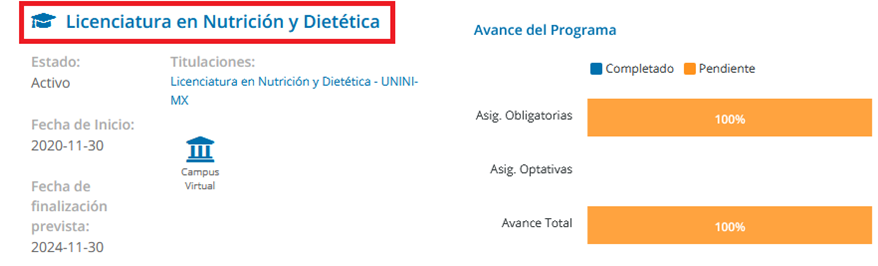 Some double degree programs may have different names for each university. If applicable, select only one and complete the field with the name of the study program.
Point 2: Student’s name |
In this section, write your full first and last names without abbreviations.
Point 3: Type of research |
- Quantitative research: It is that which uses data collection to test hypotheses based on numerical measurement and statistical analysis in order to establish patterns of behavior and test theories.
- Qualitative research: It is the one that gathers the existing discourses on the subject and then performs a rigorous interpretation. It does not require numerical, statistical, or mathematical procedures but obtains descriptive data through a possible diversity of methods.
- Mixed research: It involves a set of processes for collecting, analyzing, and linking quantitative and qualitative data in a single study or a series of investigations to respond to a problem statement.
Point 4: Title of the proposed FP |
- Length: The title should be short. There is no exact number, and the student will need to evaluate the situation. If it is possible to express the title with 10 words instead of the initially planned 13 words, then it is evident that there are 3 surplus words, which can be eliminated.
- Reliability: The title must be true to the content of the work and represent the essence of the project. The title of the paper may refer to the topic of the research, the general objective of the research, or the conclusion of the research. The title should reflect, above all, the conclusion of the project, but since at this time there is still no conclusion, it is better to formulate the title referring to the topic or, better, to the general objective.
- Comprehensibility: The title must be absolutely understandable, that is to say, that the person who reads the title clearly understands what it discusses. It is a common misconception that only experts in the field will read the project. It is suggested to observe the titles of articles in scientific journals and emulate them if compatible with the proposal itself.
Point 5: Statement of the problem and research question |
How to develop the problem statement?
It involves describing the observed phenomenon in itself, as it appears in reality. It is about describing the fact, issue, or situation that attracts attention and that is totally linked to the area of knowledge and the chosen study program.
To make a good writing, one must start from the observation of the phenomenon where it seems that something does not fit well, that there is a gap in knowledge, or that what is known requires a new version. It is a first description of what is happening, without including theoretical elements. However, this “initial problem statement” is still too broad and complex to be corrected through a research process, so it is necessary to delimit it through a well-structured research question, according to the area of study and, above all, valid for the development of the research. This question represents the guiding axis of the entire investigation.
How to ask a research question?
- Start with a broad topic: A broad topic provides a number of avenues to explore in your search for a viable research question. Brainstorming and concept mapping are some techniques that help develop a topic into subtopics and potential research questions.
- Conduct a preliminary review of the related literature: Once a topic has been chosen, a preliminary review of the related literature can be started. This initial stage of the research allows two goals to be achieved:
- Discover issues that are currently being discussed by scholars and researchers in the same area of knowledge.
- Appreciate existing gaps or limitations in the existing knowledge of the subject.
- Delimit topic and determine potential research questions: One option is to focus on gaps in existing knowledge or recent literature. This method involves constructing research questions from limitations identified in the literature that have been neglected areas of study.
- Evaluate the soundness of the chosen research question: To do this, a good strategy is to use the acronym FINER:
- Feasible: A good research question is feasible, meaning that the question is within the ability of the researcher to address.
- Interesting: The ideal research question is interesting not only for the researcher, but also for the academic community to which the topic belongs.
- Novel: A research question should be developed to contribute new knowledge to the field of study being addressed.
- Ethical: The questions and the subsequent study must be approved by the review committees and the competent authorities.
- Relevant: The research question should be relevant to the scientific community and the people involved in the area of study. If possible, the question should also be relevant to the interest of the general public.
The following are examples of research questions:
| Research question | Is it good? |
| Is it boys or girls who have more technology-related talent? And does education play a role in this? | No. It’s actually two questions instead of one. On the other hand, it is too general and lacks well-defined concepts. |
| What is iconoclasm? | No. This descriptive question is too simple to be a primary research question. However, it might be a good first sub-question. |
| What are the specific problems and characteristics of different types of stray cats (e.g., farm cats, feral cats, or stray cats in urban areas)? | Yes. It is a clearly formulated definition question. |
| Does education play an important role in defining a high school’s reputation? | No. It is a limited inferential question with a simple “yes/no” answer. |
| How can the Second World War be explained? | No. This is an explanatory question that is not specific enough and, as such, will not result in a concise answer. |
| What kind of workers in the music industry are the most productive, those who make classical, rock, or techno music? | No. It is not specific enough and may be too broad. We are talking about workers in which specific industry? Where? When? |
| How can sexual health counseling provided by mental healthcare workers in Madrid to young people in District X be improved? | Yes. The question is specific and clear |
| How can poverty among immigrants in Spain be reduced? | No. The topic is too broad to be addressed, either in the final thesis or in a master’s thesis. |
| What effect do violent movies have on children’s behavior? | No. Again. The subject matter is too broad; the question should be more concise. For example, what type of behavior will be considered in conducting the research? |
| What is the effect of preventive alcohol testing on the number of people who drive after drinking? | Yes. It is a simple and straightforward assessment question. |
Point 6: Research hypothesis |
- Descriptive hypothesis: This hypothesis attempts to predict a data or value in one or more variables to be measured or observed. For example: RH: “Student enrollment at the Autonomous University of Mexico in 2023 will be 20% higher than in 2022.”
- Correlational hypotheses: These hypotheses seek to associate or relate two or more variables without necessarily establishing which one causes the other. That is, when one variable is present, another variable also appears. For example: RH: “The greater the exposure of adolescents to music videos with high sexual content, the greater the manifestation of strategies in interpersonal relationships to establish sexual contact.”
- Group difference hypothesis: This hypothesis seeks to compare groups. For example: RH: “The persuasive effect on smoking cessation will not be the same on teens who see the color version of the television commercial than the effect on teens who see the black-and-white version of the commercial.”
- Causal hypotheses: Hypotheses establish which variables have an effect on the others, i.e., variable X causes variable Y. For example: RH: “The persuasive effect on smoking cessation will not be the same on teens who see the color version of the television commercial than the effect on teens who see the black-and-white version of the commercial.”
Only the main research hypothesis can be stated, but if desired, the null and the alternative hypothesis can be stated. The null hypotheses are, in a sense, the reverse of the research hypotheses. They also constitute propositions about the relationship between variables, only that they serve to refute or deny what the research hypothesis states. If the research hypothesis proposes: “teenager boys attribute more importance to physical attractiveness in their dating relationships than teenage girls,” the null hypothesis would postulate: “teenager boys do not attribute more importance to physical attractiveness in their dating relationships than teenage girls do.”
As their name indicates, alternative hypotheses are alternative possibilities to the research and null hypotheses: they offer a description or explanation different from those provided by the latter. If the research hypothesis states: “this chair is red,” the null will state: “this chair is not red,” and one or more alternative hypotheses could be formulated: “this chair is blue,” “this chair is green,” “this chair is yellow,” etc.
Point 7: Project justification |
- Magnitude of the problem: The people, materials, organizations, or as appropriate, affected by the lack of the project, are quantitatively supported.
- Transcendence of the problem: The medium- and long-term repercussions that would be generated if the research is not carried out and the problem is not solved.
- Feasibility of the study: States the possibility of carrying out the project, taking into account the availability of human, material, technological, temporal, bibliographic, and financial resources.
- Vulnerability of the study: The scope of a given circumstance determined on the basis of the information obtained.
Point 8: Description of objetives |
The general objective is the element that summarizes and presents the main idea of the work and the specific objectives. Basically, they are the presentation of the steps necessary to achieve the general objective.
Important: all presented objectives (general and specific) must necessarily be met in the development of the Final Project.
The objectives (general and specific) always start with a verb in the infinitive form, and Bloom’s taxonomy is a useful tool for writing objectives as it combines three models to classify learning objectives at levels of complexity.
When writing objectives, it is best to use verbs from the cognitive dimension of the taxonomy, as these are aimed towards the understanding and knowledge of a topic. The following table suggests verbs from the cognitive dimension of the taxonomy according to levels of learning: 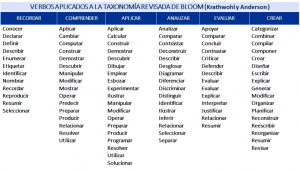
Point 9: Materials and methods |
9.1 Quantitative research
The following is an explanation of the methodological elements that should be included in a quantitative approach research, which is the most common type of research and accepted by most academic communities, especially in the exact sciences, health, engineering, economics, and technology. At the end of this section, methodologies specific to the qualitative field are explained.
As a first step, the scope of the research should be chosen, and this should be aligned with the research question and hypothesis. There are 4 scopes:
a) Exploratory scope studies: They are used when the objective is to examine a subject that has been little studied or is new. Generally, there is not much scientific information on the subject, and it is considered new research.
b) Descriptive scope studies: They seek to specify important properties and characteristics of any phenomenon being analyzed. Describes trends in a group or population.
c) Correlational scope study: It associates variables in a predictable pattern for a group or population.
d) Explanatory scope study: They aim to establish the causes of the events or phenomena being studied.
In the following video, you will find more detailed information on the scope of the research:
| Variables | Conceptual Definition | Dimensions | Indicators |
| Accessibility to health services | Increased or decreased likelihood of contacting health services for assistance | Geographic Accessibility | Time measured in hours and minutes that it takes a person to travel from his/her home to the health center |
| Affordability | Amount of money spent for care | ||
| Financial availability to cover this expense | |||
| Cultural Accessibility | Knowledge about the care provided at the health center | ||
| Perception of the health problem |
In point 7 of this manual, you will have watched the following video in which the process of operationalization of the variables is explained, specifically in minutes 02:05 to 04:49:
a) Experimental: It involves administering stimuli or treatments and/or interventions. One or more independent variables (supposed antecedent causes) are intentionally manipulated to analyze the consequences that the manipulation has on one or more dependent variables (supposed consequent effects), within a control situation for the researcher. It is about performing an action and then observing the consequences.
b) Non-experimental: It could be defined as research that is conducted without deliberately manipulating variables. In other words, these are studies in which the independent variables are not intentionally varied to see their effect on other variables. What is done in non-experimental research is to observe phenomena as they occur in their natural context in order to analyze them.
In the following video, you can learn more about the research design:
a) Probabilistic: The sample equation should be used, in addition to inclusion and exclusion criteria.
b) Non-probabilistic: The most commonly used are intentional and convenience. It is used when there are time or money constraints. It also includes inclusion and exclusion criteria.
Important: ideally, all Final Projects should do field work and define a sample. Only a few of chemical- or engineering-type can do research without a sample, but the vast majority cannot. The definition and types of samples are explained in more detail in the next class:
a) Questionnaire form
b) Interview guide
c) Checklist
d) Observation checklist
e) Likert-type measurement scale
f) Apparatus and equipment
g) Standardized tests
h) Indicators
It is desirable that the instruments be validated and have a high level of reliability. Applies to both quantitative and qualitative approaches. Below you can find more information about the measuring instruments:
9.2 Qualitative research
- Choose the appropriate methodology (explained below).
- Explain the context of the site or the particular circumstances surrounding the research subjects.
- Describe the procedures for executing the study, as explained in previous paragraphs.
- State the characteristics of the population where the study will be carried out; those that the researcher considers necessary to fulfill the general objective.
- Choose the instrument to collect the information and how it will be treated, as explained in previous paragraphs.
It should be clarified that the use of qualitative methodology is limited to social, anthropological, and educational areas, and sometimes, it is mixed with quantitative methodology to carry out mixed work. Some methodologies that can be used to develop the research are explained below:
- Action research: It is appropriate for those conducting research in the areas of education, health and social care, and even administration. It is an ideal method to undertake changes in organizations, so it is used by those researchers who have identified a problem in their work center and wish to study it in order to contribute to improvement. It focuses on the participation and development of the participants and should be documented from diagnosis to achievements.
- Ethnography: This type of design focuses on the analysis of culture from different categories, themes, or patterns. Therefore, it is a matter of unraveling the meanings of groups of individuals within a given context. Thus, the object of study is all types of organizations, such as current indigenous communities, companies, groups, teams, families, etc.
- Case study: This methodology is mainly applicable in the analysis of social and educational phenomena. It is the study of the particularity and complexity of a singular case in order to understand its activity in important circumstances. The subjects of analysis may be a phenomenon, a person, an event, or a very specific case, where the analysis should be carried out within the environment in which the object of study develops.
- Phenomenology: It is about understanding what is the meaning, structure, and essence of an experience lived by a person (individual approach), group (group approach), or community (collective approach) with respect to a phenomenon. The first step in the methodological process is the identification of the phenomenon to be studied. Next, information is gathered from the subjects who have experienced it, and finally, a shared description of the experience is prepared for all participants.
Point 10: Index to be followed in the Theoretical Framework |
In this section, suggestions for titles of chapters and subchapters to be developed in the final project should be indicated. This stage is important in order to verify if the topics proposed to be developed in the Theoretical Framework are related to the research topic and if they cover the main themes.
At this stage must the content of the chapters be developed?
No. It is only to present the titles of the chapters and subchapters when considered important, they should only be cited.
How many chapters should be submitted?
There is no exact number, but it is not appropriate to present a single chapter. Surely, the central theme of the research involves other important issues that should be treated separately. In general, it is considered that 3 or 4 chapters are absolutely sufficient to deal with the most important topics of the research.
Is it mandatory to submit the subchapters as well?
It is not mandatory, but it is recommended whenever this type of division is considered appropriate to better organize the issues to be addressed in the chapter.
Can any changes be made to the conceptual references when the final project is being developed?
Yes, of course. It may happen that a concept or topic is identified that seems important to add to the work which had not been foreseen at this stage, or an issue has to be eliminated because it does not seem interesting in the end.
Point 11: Bibliography |
At this stage, the bibliography should only be those references that will provide theoretical support to the project. The most important references that deal with the central theme of the research and that will be the basis for building the Theoretical Framework should be sought. Similar research that has used analogous methodologies should also be sought and will serve as support in the Empirical Framework.
References must be academic/scientific, such as books, theses, and scientific articles. As a general rule, no web pages should be presented, with very few exceptions.
References should be current, within the last 5 years, except for those bibliographies that are considered fundamental, historical frameworks in the subject of the research.
How many bibliographies should be submitted in FP-D1?
5 – 10 main bibliographic references should be presented so far.
What citation standard should be used to present bibliographies?
In general, students will follow the APA Guidelines (here), except for students whose Final Projects are related to Health Sciences, who will follow the Vancouver Guidelines (here).
Below is an audiovisual content related to the Vancouver Citation Guidelines and the APA Citation Guidelines:
- EBSCO: https://www.ebsco.com/e/es-es
- LILACS: http://lilacs.bvsalud.org/es/
- Directory of Open Access Journals: https://doaj.org/
- SciELO: http://www.scielo.org/php/index.php
- AMLC Journal Network: http://www.redalyc.org/
- ScienceDirect: http://www.sciencedirect.com/
- Elsevier: http://www.elsevier.com/advanced-search
- Dialnet: http://dialnet.unirioja.es/
- Google Scholar: http://scholar.google.es/
- PubMed: http://www.ncbi.nlm.nih.gov/pubmed
How can I organize the bibliography I will use in my FP? We suggest the use of a Bibliographic Manager (such as Mendeley, for example) to store the bibliographic resources you plan to use. This same software will make it easier for you to insert quotes into your FP later on.
Point 12: Index to be followed in the Theoretical Framework |
It is important to point out that publishing a scientific paper based on the Final Project does not exempt the development and presentation of the FP Report in compliance with the guidelines of the FP Regulations.
The publication of a scientific article or the presentation of a paper/project at a scientific event are activities that require effort and dedication on behalf of the student.
The following webinar explains in a practical way how to prepare an academic paper to be published in a scientific journal:
Students who wish to carry out this process may request it in this section. If their request is approved, they will be accompanied by their FP Director and may benefit from up to 1.5 points in the evaluation of their Final Project. For this purpose, before submitting their FP for evaluation and before the deadline for completion of their studies, they must demonstrate —at least— that they have applied for the publication of the article in a scientific journal or presentation of the paper/project at a scientific event.