Introduction |
The Final Project (hereinafter FP) is an individual training activity that must be completed in order to finish the studies of your academic program. In this regard, the FP Policy has been designed to guide you throughout the FP development process. About the FP phases:
- The main phases in the FP developmental process are:
- The first: defines the FP under the supervision of the FP Secretary’s Office.
- The second: develops the FP under the supervision of the FP Director.
- The third: evaluates the FP under the supervision of the Evaluation Panel.
- These main phases are made up of a series of mandatorysteps and tasks.
- The academic team will guide you toward the proper progress in developing the FP. Be aware any communications that you receive.
1. Phases of the Final Project process |
The table highlights each of the main phases of the FP preparation process, its steps, who is the academic responsible for providing advice during each and the maximum review periods.
| STEPS | ACADEMIC OFFICER | MAXIMUM REVIEW PERIOD FOR PF DOCUMENTS (BY ACADEMICS) |
|---|---|---|
| DEFINING THE FP | ||
| STEP 1. FP topic selection | FP Secretary’s Office | – |
| STEP 2. Development and submission of D0 | 5 working days after receiving the D0. | |
| STEP 3. Development and submission of D1 | – | |
| Step 3.1. D1 Review by the FP Secretary’s Office | 10 working days after receiving the D1. | |
| Step 3.2. D1 Review by the FP Director | FP Director | 7 working days after approval of the D1 (by FP Secretary’s Office). |
| STEP 4. Ethics Committee (if applicable) | Ethics Committee | 15 working days |
| FP DEVELOPMENT | ||
| STEP 5. Development and submission of Progress Report 1 | FP Director | – |
| Step 5.1. Selecting the Official FP Report Template | – | |
| Step 5.2. Development of Progress Report 1 | – | |
| Step 5.3. Review and submission of Progress Report 1 by the FP Director |
|
|
| STEP 6. Development and submission of Progress Report 2 | – | |
| Step 6.1. Development of Progress Report 2 | – | |
| Step 6.2. Review and submission of Progress Report 2 by the FP Director |
|
|
| Step 7. Scientific publication (optional) | – | |
| FP EVALUATION | ||
| STEP 8. Submission of the FP Report | FP Director | – |
| STEP 9. Oral presentation (if applicable) | – | |
| STEP 10. Evaluation of the FP Report | Evaluation Panel |
|
2. Prerequisites |
The prerequisites to begin the FP are:
- Have passed 2/3 of the subjects comprising the academic program (approximately 66%). Academic Progress can be consulted in the Panal .
- For all students, this percentage must include having taken and passed the Scientific Research Methodology or equivalent subjects (if included in the syllabus).
- Students taking programs with Research Seminar(s) must also have passed the Research Seminar(s).
- Students enrolled in programs with a Design Module must also have passed the Design Module.
- Students enrolled in the International Master’s in Business Administration and Management (MBA) program must also have passed the first phase of the Company Project, the Company Plan.
- Students enrolled in the Master’s in Cultural Project Management program must also have passed the first 3 assignments of the Collaborative Cultural Project.
3. Defining the Final Project |
This phase focuses on developing documents D0 and D1 to clearly define the type and topic of the FP, as well as to establish the main elements of the preliminary project. Throughout this process, the FP Secretary’s Office will provide guidance and oversight. If you need any guidance, please contact through the PANAL.
| THE FUNCTIONS OF THE FP SECRETARY’S OFFICE ARE | THESE ARE NOT FUNCTIONS OF THE FP SECRETARY’S OFFICE: |
|---|---|
|
|
Step 1. Selecting the FP topic and type
The first step requires two actions:
- Defining the topic by considering expectations and interests, the professional setting, access to information, and the tradition of the academic area (and your specialty, if it is part of the academic program).
- Selecting the type of project to be developed, which may include two types:
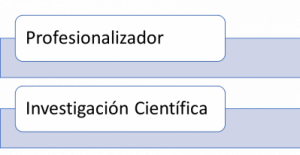 Below are the different FP types:
FP Professionalizer
The main goal of this approach is to practically apply knowledge to address a challenge or seize an opportunity. Typically, the methodology involves diagnosing the current situation and then crafting a proposal to address it, although variations may exist depending on the academic traditions of specific fields. The focus is primarily on the content and the unfolding of the proposal itself. Instead of relying on a formal theoretical framework, this approach utilizes a section dedicated to conceptual references, which serves to underscore and elucidate the crucial components of the proposal. Examples of the FP Professionalizer within different fields of study:
| Scope of study | Examples of FP Professionalizer |
|---|---|
| Health Sciences | Design of a healthy snack for morbidly obese people |
| Social Sciences and Humanities | Proposal for conflict mediation and communication improvement in a service company |
| Engineering | Risk prevention and self-protection plan for the city hall of a city in northern Argentina |
Scientific Research
The objective of this approach is to provide an original contribution to existing knowledge while adhering to rigorous methodological standards. The Theoretical Framework plays a crucial role in this type of project, as it aids in comprehending and interpreting the results obtained. Predominantly, projects of this nature employ the classic scientific method. This entails observing a phenomenon, posing a question based on that observation, conducting thorough research on the topic, generating a hypothesis, experimentally testing that hypothesis, analyzing the gathered data, formulating conclusions, and ultimately, sharing the findings through research journals or at academic conferences. Examples of FP Scientific Research within different fields of study:
| Scope of study | Examples of FP Scientific Research |
|---|---|
| Health Sciences | Left ventricular diastolic dysfunction in patients with chronic kidney disease not treated by dialysis |
| Social Sciences and Humanities | The impact of political connections on firm performance: evidence from upstream oil and gas companies |
| Engineering | Estimation of suspended sediment concentration of Keenjhar Lake through remote sensing |
Step 2: D0 development and submission
Once the FP topic and type have been decided, the next step is to submit the FP to the FP Secretary’s Office through the D0 document.
To do this, the D0 Development Handbook is designed to facilitate the proper preparation of the D0 document.
Once the D0 documentis completed, it must be sent through the Panal and received by the FP Secretary’s Office.
The FP Secretary’s Office will evaluate the document within a maximum period of 5 working days. The following scenarios may take place:
- Accepted: the student will be able to move on to the next step, the development of D1.
- Needs corrections: the FP Secretary’s Office will inform the student of the improvements to be made in the D0 document. The latter shall make the corrections and proceed with a new submission of the corrected D0 document through the Panal.
- Not accepted: the student will have to formulate the D0 again, presenting another topic.
Step 3: Development and submission of D1
Once the D0 document has been accepted, the student must consult the specific regulations for the type of approved project. The following provides access to each so that you may continue developing your FP in accordance with the corresponding regulations: