Introduction |
This manual has been designed to assist in the correct preparation of the FP Research Report Template document. Here you will find the necessary information to complete the mandatory fields for this document, as well as some examples to better understand it.
Initial considerations |
The following are some important details to keep in mind when developing the document:
- In the FP Research Report Template, Advance 1 should be developed first, followed by Advance 2.
- It is mandatory to complete all sections of the FP Report Template, as well as to respect its original format and structure.
1. Cover |
You must include the cover of the University that entitles your program of study. If more than one degree is chosen, the cover pages of all the degree-granting Universities must be included. Below, you can download the cover(s) of the corresponding University(ies):
- Universidad Internacional Iberoamericana – Mexico
- Universidad Europea del Atlántico
- Fundación Universitaria Internacional de Colombia
- Universidad Internacional Iberoamericana – Puerto Rico
If there are doubts about the titling University, remember to consult the PANAL as indicated in the figure below: 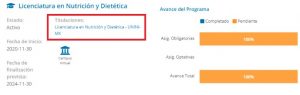 The sections to be completed on the cover page are listed below:
- Name of the academic area of the study program: the study programs are associated with an academic area, for example:
- Environment
- Health and Nutrition
- Sports
- ICT Technologies
- Tourism
- Companies
- Law, Policy
- Psychology, HR.
- etc.
If there are doubts about the area to which the curriculum is associated, the FP Director can be consulted.
- FP title: the FP title must correspond to the title defined and approved in the D1 document.
- Study program's complete name: (remember that the full name of the program can be consulted in the Panal)If the student is enrolled in several universities, it is important to note that the name of the program may vary depending on the University. In this case, the cover page of each university must include the name of the corresponding program.
- Student's complete name: full name must be included, presenting all names and surnames without using abbreviations.
- Student's login: the student's login corresponds to the user code for accessing the Panal.
- Name of the FP Director: the name of the FP Director must be included.
- Student's city and country: the name of the student's city and country must be submitted.
- Year of completion of the FP: the year of completion of the FP must be submitted. The day and month are not presented but the year.
When submitting the FP Progress, the following scenarios may occur:
- Student graduating from a university: in the same document where the FP Progress is developed (not in a separate file), you must include the cover page corresponding to that university.
- Students graduating from several universities: in this case, when sending the FP Progress, you must attach a previously compressed file (in ZIP or RAR format), containing the following documents:
- The development of the corresponding FP Progress (in Word format).
- The cover pages of the universities; each of them must be included in a separate document.
2. Dedication and Acknowledgments |
The dedication and acknowledgments are optional. However, they are very frequent sections in Final Projects.
- In the dedication, the student dedicates the conclusion of the paper to the people closest to him/her, such as family and friends.
- On the other hand, in the acknowledgments, the student thanks the people and/or institutions that were directly or indirectly involved in the FP and have been important for the completion of the project. If the student has received a scholarship, it is also very important to thank the institution that provided the scholarship
Considerations:
- The dedication and acknowledgments are presented on separate pages.
- If the student decides not to present them, the student may delete these sections in the FP Report.
3. Author's commitment |
In this section, the student, as the author of the FP and responsible for it, commits to present an original work. This section is mandatory in all FPs and cannot be deleted. It should be completed from the beginning of the development of the FP Progress, i.e., it should be submitted from Advance 1. The text is already written (it should not be modified, it should be respected), and the students should only complete, in black and bold, the following information:
- The full name, presenting all first and last names, without using abbreviations.
- The signature digitized in scanner and with a white background. It cannot be in photo format.
Correct way to insert the signature: Incorrect way to insert the signature:

4. Voluntary authorization of electronic publication of the FP |
Authorization for electronic publication of the FP Report is voluntary and not mandatory.
- If the student gives his/her authorization, the text is already written (it should not be modified, it should be respected); only the sections in blue should be completed in black and bold.
- If the student does not give his or her authorization, this section may be deleted from the FP Report.
5. General index |
| Respect the font format of the index available in the FP Report template. This index uses the font format required in the Manual on Formal Aspects (available HERE) for the chapters/sections/subsections of the index. |
The index shows the complete structure of the FP, it should consist of the following main sections:
- Introduction
- Problem statement, objectives, and hypothesis
- Theoretical framework.
- Methodology
- Results
- Discussion
- Conclusions
- Bibliographic references
- Annexes
According to the needs of the course of work development, this index may be modifiable until the completion of the FP. If a correction is deemed necessary, it must be authorized by the FP Director. The index must be composed of all the chapters/ subchapters/ sections/ subsections that make up the FP and must include the page number where they begin in the development of the FP.
6. Index of figures and tables |
The inclusion of tables and figures in the development of the FP, both in the theoretical framework and in the methodology, is essential to complement the explanations in the text:
- The tables show the data in an organized manner in rows and columns, facilitating comprehension.
- The figures are any type of illustration other than a table. Figures are understood to be images, maps, photographs, graphs, or any other form of graphic representation.
- The tables and figures used should be didactic and not decorative. We must avoid those figures that do not provide added value.
This section is mandatory only in papers presenting figures and/or tables. This index of figures and/or tables should be included even if the FP has a very small number of figures and/or tables, such as, for example, only one or two figures. In the index of figures and/or tables:
- Numbering should be in Arabic numerals and should consist of a digit corresponding to its appearance in the text, starting with Table 1 or Figure 1 for the first table or figure in the project, Table 2 or Figure 2 for the second table or figure in the project, and so on.
- Tables and figures are numbered independently. For example, in the same project, there may be Table 3 and Figure 3: Table 3 will be the third table of the project, and Figure 3 will be the third figure of the same project.
- The paging, i.e., the page number where the figure or table is located, must be included.
- Formatting such as bold and/or italics is not used.
- Bibliographic sources are not presented.
| For more information on the format that figures and tables must comply with, see the Manual on Formal Aspects (available HERE) for the chapters/sections/subsections of the index. |
7. Annexes index |
- Annexes are those documents that support and complement the development of the Final Project.
- The annexes mentioned in this annexes index should be included in the Annexes chapter.
- The index of appendices follows exactly the same rules of presentation as the index of figures and tables.
- If annexes were included in the D1 document, and will also be related to the development of the Progress, they should be included in the FP Progress.
8. Summary, Abstract, and Keywords |
8.1. Summary
- Research problem
- General objective and hypothesis
- Methodology used
- Main results achieved
- Main conclusions
The following aspects are important when writing the summary:
- It should not exceed 500 words.
- Always write in the third person singular.
- Do not submit bibliographic citations.
- Do not use tables, charts, and/or other diagrams.
- Avoid the use of acronyms and abbreviations as much as possible.
- The summary should be written in a single paragraph.
8.2 Abstract
The development of the abstract is optional and corresponds to the translation of the Summary into English. In the case of including it in the FP:
- It will be exempt from academic review and evaluation.
- Do not do so until the abstract (in Spanish) has been approved by the FP Director.
- Never use online translators; in general, they do not do a good job. If you are not fluent in English, it is best to hire the services of a professional translator. Another option may be to rely on the help of a colleague who is fluent in English.
- Remember to translate the Keywords as well.
8.3. Keywords
9. Introduction |
9.1. Guidelines for its preparation
- It is recommended to write it at the end, in the past or present continuous tense, and it should be clear, precise, and concise.
- There should be a presentation of the topic/problem addressed, the motivations for developing the chosen topic, the objectives, the methodology, and some results. The last part will consist of a brief summary of each chapter of the paper.
- Some mistakes to avoid during the writing process are
- Unnecessary adjectives: the wording should be neutral, moderate, academic, without stridencies.
- Redundant wording and untidiness: repeating an idea too much, talking about "the present paper" or "the present research" are mistakes to be avoided. In the same way, it is not possible to start with the chapter but first with a contextualization and the objectives of the project.
- Writing in parts: the introduction is written in prose, with consistent paragraphs and, if necessary, highlighting important ideas and concepts, but it is not advisable to make a subindex of the introduction where its elements are written.
- Writing in the first person: "I consider," "for me" are not used. The correct verb tense of an introduction is the past or present continuous through the passive voice.
- The introduction is a different section from the others; therefore, it should be placed on a separate page as a section.
9.2. Writing guide
This section is developed by answering the following questions: What is the topic of the research? (the object of study can be defined and contextualized) The suggested wording is: The topic addressed in this research work is… which is defined as… and some relevant aspects of this topic are… What is the interest for doing the research? (personal, professional, or intellectual motivations) The suggested wording is: The interest in developing the topic is… and this has to do with… What is the general purpose of the research? (General objective) The suggested wording is: The general purpose of the research is… and it was thought of in this way because… What is the methodology used? (in prose and in a maximum of one paragraph) The suggested wording is: The methodology used in this research is of the… type, and for this purpose, the following methodological elements were developed… What is the structure of the project, i.e., the chapters contained in the research, and what does each one of them consist of? (one paragraph for each chapter) The suggested wording is: The following is a description of the content of each of the chapters of the research work. Chapter 1 discusses… Chapter 2 deals with… Chapter 3 develops…
10. Problem statement, objectives, and hypothesis |
This section is the guiding axis of the entire research project, and there must be coherence between each of the subsections. Information can be subtracted from D1.
10.1. Problem statement
- Start with a broad topic: A broad topic provides a number of avenues to explore in your search for a viable research question. Brainstorming and concept mapping are some techniques that help develop a topic into subtopics and potential research questions.
- Conduct a preliminary review of the related literature: Once a topic has been chosen, a preliminary review of the related literature can be started. This initial stage of the research allows two goals to be achieved:
- Discover issues that are currently being discussed by scholars and researchers in the same area of knowledge.
- Appreciate existing gaps or limitations in the existing knowledge of the topic.
- Delimit topic and determine potential research questions: One option is to focus on gaps in existing knowledge or recent literature. This method involves constructing research questions from limitations identified in the literature that have been neglected areas of study.
- Evaluate the strength of the chosen research question: To do this, a good strategy is to use the acronym FINER:
- Feasible: A good research question is feasible, meaning that the question is within the ability of the researcher to address.
- Interesting: The ideal research question is interesting not only for the researcher but also for the academic community to which the topic belongs.
- Novel: A research question should be developed to contribute new knowledge to the field of study being addressed.
- Ethical: The questions and the subsequent study must be approved by the review committees and the competent authorities.
- Relevant: The research question should be relevant to the scientific community and the people involved in the area of study. If possible, the question should also be relevant to the interest of the general public.
The following are examples of research questions:
| Main research question | Is it good? |
| Is it boys or girls who have more technology-related talent? And does education play a role in this? | No. It's actually two questions instead of one. On the other hand, it is too general and lacks well-defined concepts. |
| What is iconoclasm? | No. This descriptive question is too simple to be a primary research question. However, it might be a good first sub-question. |
| What are the specific problems and characteristics of different types of stray cats (e.g., farm cats, feral cats, or stray cats in urban areas)? | Yes. It is a clearly formulated definition question. |
| Does education play an important role in defining a high school's reputation? | No. It is a limited inferential question with a simple "yes/no" answer. |
| How can the Second World War be explained? | No. This is an explanatory question that is not specific enough and, as such, will not result in a concise answer. |
| What kind of workers in the music industry are the most productive, those who make classical, rock, or techno music? | No. It is not specific enough and may be too broad. We are talking about workers in which specific industry? Where? When? |
| How can the sexual health counseling that mental health workers in Madrid provide to young people in District X be improved? | Yes. The question is specific and clear |
| How can poverty among immigrants in Spain be reduced? | No. The topic is too broad to be addressed, either in the final degree project or in a master's thesis. |
| What effect do violent movies have on children's behavior? | No. Again. The subject matter is too broad; the question should be more concise. For example, what type of behavior will be considered in conducting the research? |
| What is the effect of preventive alcohol testing on the number of people who drive after drinking? | Yes. It is a simple and straightforward assessment question. |
10.2. Objectives
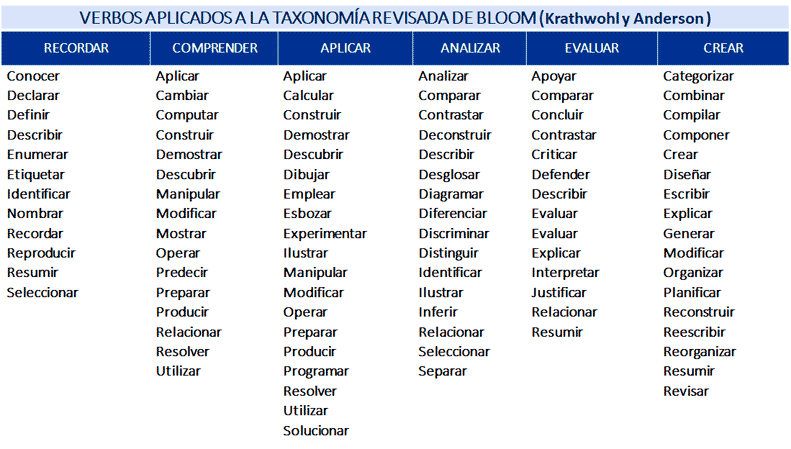
10.3. Hypothesis
- Descriptive hypothesis: This hypothesis attempts to predict a data or value in one or more variables to be measured or observed.
For example: RH: "Student enrollment at the Universidad Autónoma de México in 2023 will be 20% higher than in 2022."
- Correlational hypotheses: These hypotheses seek to associate or relate two or more variables without necessarily establishing which one causes the other. That is, when one variable is present, another variable also appears.
For example: RH: "The greater the exposure of adolescents to music videos with high sexual content, the greater the manifestation of strategies in interpersonal relationships to establish sexual contact."
- Group difference hypothesis: This hypothesis seeks to compare groups.
For example: RH: "The persuasive effect on smoking cessation will not be the same on teens who see the color version of the television commercial than the effect on teens who see the black-and-white version of the commercial."
- Causal hypotheses: Hypotheses establish which variables have an effect on the others, i.e., variable X causes variable Y.
For example: RH: "The persuasive effect on smoking cessation will not be the same on teens who see the color version of the television commercial than the effect on teens who see the black-and-white version of the commercial." Only the main research hypothesis can be stated, but if desired, the null and the alternative hypothesis can be stated. The null hypotheses are, in a sense, the reverse of the research hypotheses. They also constitute propositions about the relationship between variables, only that they serve to refute or deny what the research hypothesis states. If the research hypothesis proposes: "teenage boys attribute more importance to physical attractiveness in their dating relationships than teenage girls," the null hypothesis would postulate: "teenage boys do not attribute more importance to physical attractiveness in their dating relationships than teenage girls do." As their name indicates, alternative hypotheses are alternative possibilities to the research and null hypotheses: they offer a description or explanation different from those provided by the latter. If the research hypothesis states: "this chair is red," the null will state: "this chair is not red," and one or more alternative hypotheses could be formulated: "this chair is blue," "this chair is green," "this chair is yellow," etc.
10.4. Writing guide
This section is developed by answering the following questions: What is the observed phenomenon? And what are its characteristics? (subtract what is developed in D1 and develop it in 2 or 3 pages) The suggested wording is: The problem statement is based on the phenomenon X, observed and analyzed in the context Y, with the characteristics Z… What is the justification for the research project? (subtract what is developed in D1) The suggested wording is: The magnitude of the problem is… The significance of the problem is… The feasibility of the study is… The vulnerability of the study is… What is the research question? (subtract what is developed in D1) The suggested wording is: Based on the above, the following research question arises… What is the general objective of the research (subtract what is developed in D1) The suggested wording is: For the research question posed above, the following general objective is proposed… What are the specific objectives of the research? (subtract what is developed in D1) The suggested wording is: In order to address the proposed general objective, the following specific objectives are stated… What are the hypotheses of the research? (subtract what was developed in D1 only if it was developed, if not, it can be omitted) The suggested wording is: As a tentative answer to the research question and in accordance with the proposed objectives, the following hypothesis(es) is/are put forward…
11. Theoretical framework |
- The state of knowledge: what has been researched on the subject and the knowledge gap that exists. It must be written in chronological order, and it is very important that it be from the last 5 years in the area of health and exact sciences.
- Theoretical constructs alluding to the research problem: this refers to explaining the concepts and ideas that are related to the object of study and that will serve to explain and interpret the results.
11.1. Guidelines for its preparation
- Perform a complete bibliographic search on the object of study in appropriate search engines and databases (PubMed, EBSCOHost, Google Scholar…).
- Use keywords in the bibliographic search, both in Spanish and English. Important: the updated scientific evidence is mostly in Anglo-Saxon language.
- Collect and carefully read the relevant sources found after the bibliographic search.
- Note which elements can be drawn from each source and associate them with the corresponding sections or subsections of the theoretical framework.
- Identify all sources consulted that will be used for citation during the writing of the final project content.
- Include bibliographical references in each paragraph when they are based on the bibliography consulted. Do not wait to finish writing a chapter, it should be a continuous and dynamic process.
- Use a bibliographic manager to facilitate efficient management of the bibliographic references consulted.
- Make a complete outline of the theoretical framework with the points to be addressed, so that the common thread is understood throughout each chapter.
- Use a narrative style that facilitates reading for the Evaluation Tribunal, sequencing all paragraphs correctly.
- Reread on different days, at least twice, the theoretical framework with a self-critical spirit to look for inconsistencies and spelling and grammatical errors.
- Check the Manual on Formal Aspects and the Vancouver Standards or APA Standards (whichever corresponds to the standards commonly used in your program of studies. In general, students will follow the APA Standards, except those whose final projects are related to Health Sciences, who will adhere to the Vancouver Standards).
11.2. Most common errors in the writing of the theoretical framework
- Use information from different sources without giving them a common thread.
- Write the subsections without giving them a connection. It should not be forgotten that the theoretical framework is a "whole," and that it must make sense to read the entire document in order to understand the need to develop the study in question.
- Abuse of conceptual and terminological explanations, as a "dictionary."
- Abuse of direct quotes.
- Use few sources for the writing of the entire theoretical framework.
- That a large part of the theoretical framework is based on bibliographic sources more than 5 years old and that these are not referents for the Final Project.
- Include too many tables and figures in the theoretical framework with the intention of taking up more space. Only those summary tables or explanatory figures that facilitate the understanding of more complex aspects, such as classifications, processes, etc., should be provided (see Manual on Formal Aspects).
- Moving away from the objective of the final project, detailing information on complementary aspects not relevant to the development of the FP.
- Copying and pasting verbatim information from sources consulted without paraphrasing. This is considered plagiarism (for more information, review APA Standards or Vancouver Standards, as appropriate).
- Including direct or indirect quotations without accompanying them with the corresponding bibliographic reference: this is considered plagiarism (for more information, review APA Standards or Vancouver Standards, as appropriate).
11.3. Writing guide
This section is developed by answering the following questions: What has been investigated? And what is known about the subject so far? (based on recent scientific articles and other academically rigorous sources) The suggested wording is: Among the research background related to the topic, the contributions of…, which consist of…, which in turn is related to…, and in the same line of knowledge, another research was done by… who confirms what was said in…. Therefore, this research is appropriate because it fills the knowledge gap related to what topics and concepts are relevant in relation to the object of study? (based on recent scientific articles and other academically rigorous sources) The suggested wording is: To address the research problem, it is necessary to explain concept A, which, according to author X, can be defined as… In the same sense, concept B helps to better understand the problem posed because, from this, it can be explained that…
12. Methodology |
It should explain clearly and concisely how the research was conducted. If quantitative research was conducted, the methodological elements of that research approach must be developed, and the same is true for qualitative or mixed research.
12.1 Quantitative research
The following is an explanation of the methodological elements that should be included in a quantitative approach research, which is the most common type of research and accepted by most academic communities, especially in the exact sciences, health, engineering, economics, and technology. At the end of this section, methodologies specific to the qualitative field are explained. As a first step, the scope of the research should be chosen, and this should be aligned with the research question and hypothesis. There are 4 scopes:
- Exploratory scope studies: They are used when the objective is to examine a subject that has been little studied or is new. Generally, there is not much scientific information on the subject, and it is considered new research.
- Descriptive scope studies: They seek to specify important properties and characteristics of any phenomenon being analyzed. Describe trends in a group or population.
- Correlational scope study: It associates variables in a predictable pattern for a group or population.
- Explanatory scope study: They aim to establish the causes of the events or phenomena being studied.
In the following video, you will find more detailed information on the scope of the research:
| Variables | Conceptual Definition | Dimensions | Indicators |
|---|---|---|---|
| Accessibility to health services | Increased or decreased likelihood of contacting health services for assistance | Geographic Accessibility | Time measured in hours and minutes that it takes a person to travel from his/her home to the health center |
| Affordability | Amount of money spent for care | ||
| Financial availability to cover this expense | |||
| Cultural Accessibility | Knowledge about the care provided at the health center | ||
| Perception of the health problem |
In point 7 of this manual, you will have watched the following video in which the process of operationalization of the variables is explained, specifically the variables in minutes 02:05 to 04:49:
- Experimental: it involves administering stimuli or treatments and/or interventions. One or more independent variables (supposed antecedent causes) are intentionally manipulated to analyze the consequences that the manipulation has on one or more dependent variables (supposed consequent effects), within a control situation for the researcher. It is about performing an action and then observing the consequences.
- Non-experimental: It could be defined as research that is conducted without deliberately manipulating variables. In other words, these are studies in which the independent variables are not intentionally varied to see their effect on other variables. What is done in non-experimental research is to observe phenomena as they occur in their natural context in order to analyze them.
In the following video, you can learn more about the research design:
- Probabilistic: The sample equation should be used, in addition to inclusion and exclusion criteria.
- Non-probabilistic: The most commonly used are intentional and for convenience. It is used when there are time or money constraints. It also includes inclusion and exclusion criteria.
Important: ideally, all Final Projects should do field work and define a sample. Only a few of chemical- or engineering-type can do research without a sample but the vast majority cannot. The definition and types of samples are explained in more detail in the next class:
- Questionnaire format
- Interview guide
- Checklist
- Observation list
- Likert-type measurement scale
- Apparatus and equipment
- Standardized tests
- Indicators
It is desirable that the instruments be validated and have a high level of reliability. Applies to both quantitative and qualitative approaches. Below you can find more information about the measuring instruments:
12.2. Qualitative research
- Choose the appropriate methodology (explained below).
- Explain the context of the site or the particular circumstances surrounding the research subjects.
- Describe the procedures for executing the study, as explained in previous paragraphs.
- State the characteristics of the population where the study will be carried out; those that the researcher considers necessary to fulfill the general objective.
- Choose the instrument to collect the information and how it will be treated, as explained in previous paragraphs.
It should be clarified that the use of qualitative methodology is limited to social, anthropological, and educational areas, and sometimes, it is mixed with quantitative methodology to carry out mixed work. Some methodologies that can be used to develop the research are explained below:
- Action-research: It is appropriate for those conducting research in the areas of education, health and social care, and even administration. It is an ideal method to undertake changes in organizations, so it is used by those researchers who have identified a problem in their work center and wish to study it in order to contribute to improvement. It focuses on the participation and development of the participants and should be documented from diagnosis to achievements.
- Ethnography: This type of design focuses on the analysis of culture from different categories, themes, or patterns. Therefore, it is a matter of unraveling the meanings of groups of individuals within a given context. Thus, the object of study is all types of organizations, such as current indigenous communities, companies, groups, teams, families, etc.
- Case study: This methodology is mainly applicable in the analysis of social and educational phenomena. It is the study of the particularity and complexity of a singular case in order to understand its activity in important circumstances. The subjects of analysis may be a phenomenon, a person, an event, or a very specific case, where the analysis should be carried out within the environment in which the object of study develops.
- Phenomenology: It is about understanding what is the meaning, structure, and essence of an experience lived by a person (individual approach), group (group approach), or community (collective approach) with respect to a phenomenon. The first step in the methodological process is the identification of the phenomenon to be studied. Next, information is gathered from the subjects who have experienced it, and finally, a shared description of the experience is prepared for all participants.
12.3. Writing guide
This section is developed by answering the following questions: What are the methodological elements of the research question? (can be subtracted from D1) The suggested wording for quantitative research is: 4.1 Scope Scope X was defined for the project due to… 4.2 Sample The sample was drawn from…and is of a probability/non-probability type with the following inclusion/exclusion criteria. 4.3 Variables The operationalization of the variables was carried out as follows… 4.4 Research design The research design X was chosen, for the reasons Y… 4.5 Research instruments The following research instruments were chosen…and the reason for their use is… 4.6 Quantitative data analysis For the analysis of the collected data, the statistical tool X and the software Y are used. 4.7 Procedures The procedures used in the research are described below: The suggested wording for qualitative research is: 4.1 Methodology The methodology chosen to address the research problem is 4.2 Context The research was conducted at location X and in circumstances Y 4.3 Procedures The procedures used in the research are described below: The suggested wording for qualitative research is: The following elements of the qualitative approach are taken up…, and on the other hand, the following elements of the quantitative approach are taken up…
13. Results |
13.1. Guidelines for its preparation
- It must be written in the past tense.
- The results should be presented sequentially according to the specific objectives of the work, i.e., no more results should be presented than necessary.
- In order for this section to be more easily understood, explanations and descriptions should be combined with figures and tables since in this way the findings obtained in the paper can be more easily visualized.
- Avoid duplication of data, especially when presented in tables and figures.
- If deemed appropriate, divide them into subsections.
- Finally, remember that only important data and information should be included in this section. All data and information that are not but still need to be submitted should be moved to the Annexes section.
13.2. Writing guide
This section is developed by answering the following questions: What was obtained as evidence after executing the methodological section? (explain in a broad and detailed way, with the use of tables, schemes, diagrams, and everything that helps a better visualization) The suggested wording is: The results of the instruments applied are presented below… Result 1.. Table 1… Interpretation 1.. Result 2.. Table 2.. Interpretation 2.. What was obtained as a result after the application of statistical techniques for the treatment of the data obtained? (you can copy and paste the results from the Software used or develop the exercise manually) The suggested wording is: The following is the statistical model X, run on Software Y, which proves/refutes the hypothesis and answers the research question affirmatively/negatively/partially
14. Discussion |
14.1. Recommendations for writing
- First, review discussions of the subject that have been carried out by other authors in order to have an approximation of the correct way to write this section and apply similar structures.
- In each paragraph, state one finding of the study, comparing it with those of similar studies that, in principle, should have already been mentioned in the theoretical framework.
- It is very important to highlight the positive differences of the study with respect to the rest of the research carried out since it is these positive differences that justify the design of the work.
14.2. Writing guide
This section is developed by answering the following questions: How can the results obtained be interpreted? (explain in a comprehensive and detailed manner, with the use of bibliographic references) The suggested wording is: The results obtained say that…, which means that…, and from this, it can be interpreted that…. How does what is obtained in this research complement the theoretical knowledge already existing and previously published? (explain in a comprehensive and detailed manner, with the use of bibliographic references) The suggested wording is: The contribution to the knowledge gap covered by this research consists of… Some similarities/contradictions of this research with respect to others are… The findings found imply a complement/update to the already existing knowledge because… With the results of this research, what was said by authors X, published in year Y, is reaffirmed. This research coincides/differs with the perspective of X, who mentions that…
15. Conclusions |
15.1. Recommendations for your writing
- The verb tense to be used is always the present tense.
- The objectives of the work should be reviewed, and an assessment should be made as to whether they have been met.
- The most relevant results of the work should be included in this section, without including references or discussing them.
- Use humble language regarding the findings; inconsistent and unnecessary inferences should not be made.
- Establish the limitations that have been presented in the project, as well as the improvements that could be made, both of a theoretical, methodological ,or practical nature for future papers.
- Finally, this section may indicate future lines of research based on this work.
15.2. Writing guide
This section is developed by answering the following questions: Were the objectives met? (one paragraph for each objective) The suggested wording is: In accordance with the stated objectives, the study has been successful in terms of What are the most important findings of the research? (write in the present tense and without the use of bibliographical references) The suggested wording is: It follows from the above that… In conclusion, the study coincides with the idea X but differs with respect to Y. In summary, the evidence shows that outcome X is favorable for attacking problem Y. According to the results obtained, idea X is supported but not necessarily idea Y. In conclusion, the contributions made by the study are not sufficient in terms of…, but they give an important idea about the phenomenon studied. Within the analysis, two possible aspects can be elucidated: the X and the Y. What are the limitations of the study? (theoretical, practical, or methodological) The suggested wording is: The theoretical limitations that were encountered during the development of the research were… On the other hand, the practical limitations that could not be overcome are… And finally, what methodologically set the tone of the study is related to… What are the future lines of research? (one paragraph for each suggested line) The suggested wording is: Possible lines of research suggested for future projects based on the results obtained are:
16. Bibliography |
Present the bibliographic references according to the citation norms that correspond to the research topic. In general, students will follow the APA Standards, except those whose final projects are related to Health Sciences, who will adhere to the Vancouver Standards.
16.1. Examples of bibliographic databases
There are many portals and bibliographic search engines, as well as thesis repositories. The following are some examples of generic databases, the most important and well-known, but it will be necessary to search for bibliography in specialized databases in the area of study.
- EBSCO: https://www.ebsco.com/e/es-es
- Open Access Theses and Dissertations: https://oatd.org
- LILACS: http://lilacs.bvsalud.org/es/
- Directory of Open Access Journals: https://doaj.org/
- SciELO: www.scielo.org/php/index.php
- AMLC Journal Network: www.redalyc.org
- ScienceDirect: http://www.sciencedirect.com/
- Elsevier: http://www.elsevier.com/advanced-search
- Dialnet: http://dialnet.unirioja.es/
- Google Scholar: http://scholar.google.es/
- PubMed: www.ncbi.nlm.nih.gov/pubmed
17. Annexes |
The annexes are those documents that support and complement the development of the research. They should contain information that has helped to carry out the FP, but which does not fit in any of the chapters/paragraphs/sections of the FP Report, nevertheless. The annexes that are included are those that have been included in the index of annexes, they must be correctly numbered, and follow the order of presentation in the FP, and it is advisable to mention them in the development of the FP. Some examples of annexes are:
- Letter of approval of the research by the Ethics Committee (only if your final project requires it)
- Interview guide(s)
- Transcription of interviews or focus groups
- Characterization of the sample
- Description of the techniques or instruments used
- Collection of data obtained in statistical analysis
- Glossaries
There is no specific number of annexes that must be included in the FP Report; include those that are considered appropriate and provide added value to the research.